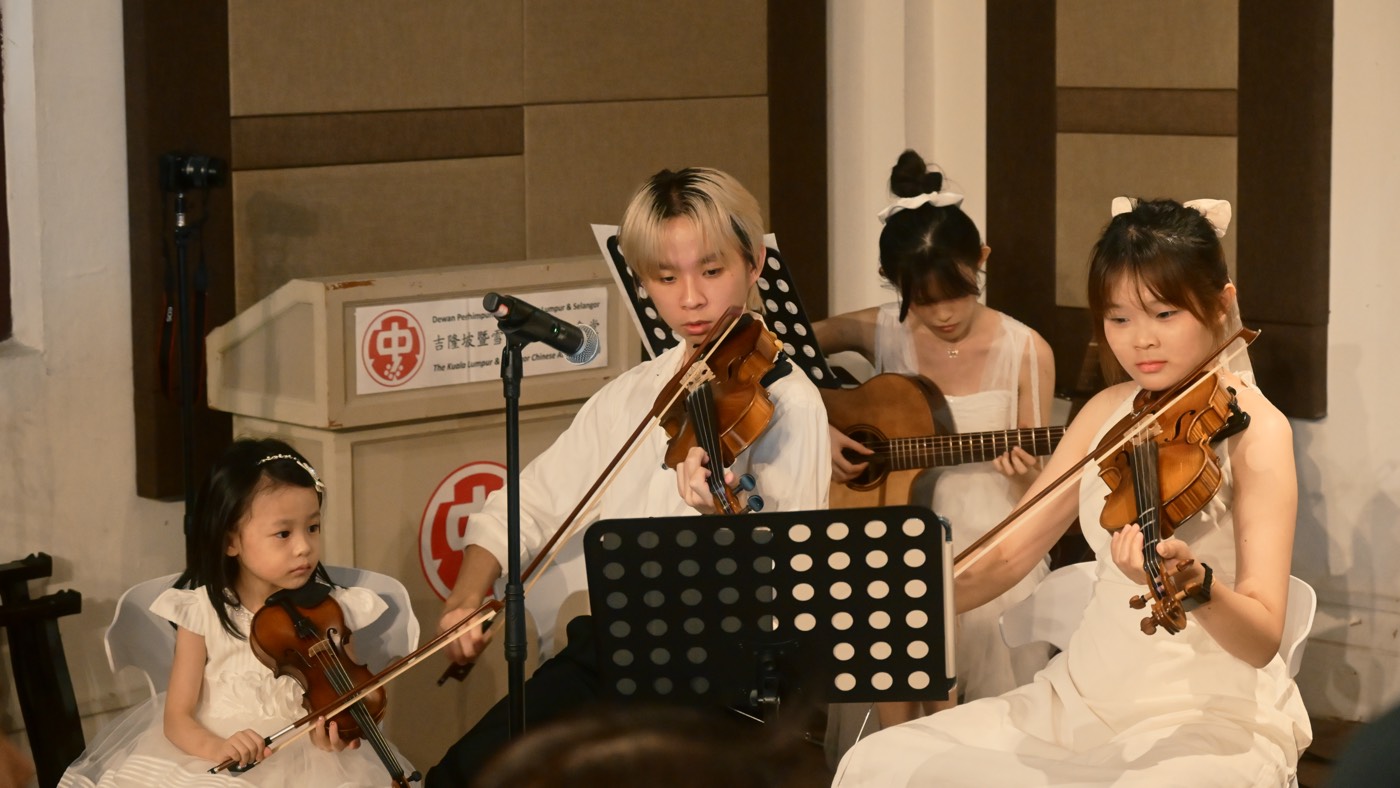
Parents usually arrive with the instrument already chosen — by a grandparent, by a film, by whatever a cousin plays. Sometimes that choice is exactly right. Often the child would have been better served by something nobody in the family had thought of.
There is no test that settles it. But there are four filters that narrow eight options down to two or three, and after that a trial lesson does the rest.
- Hands and height. Every instrument has a physical floor — reach, grip, lung capacity.
- Temperament. Some instruments reward patience with slow beauty; others give a beginner something loud and satisfying in week one.
- The household. What can be practised in your home, at the hour your child is actually free?
- What they are drawn to. The weakest predictor of aptitude and the strongest predictor of practice.
Start with the child, not the instrument
The most useful question is not what should they play but what will they still be playing in three years. Those are different questions, and the second one is answered mostly by temperament.
A child who likes finishing things, who tidies, who wants to be correct, tends to thrive on instruments where the reward arrives steadily — piano, violin, cello. A child who is physical, restless and social often does better where the first month produces something audible and fun — drums, ukulele, guitar. A child who sings constantly and is self-conscious about it may be a vocalist who needs to be eight first.
None of this is destiny. It is a way of choosing which two instruments to trial rather than which one to buy.
The eight we teach, and who each one suits
Every one of these is taught one-to-one, weekly, at both branches. The ages are physical floors rather than recommendations — read them as not before, not as at.
The default first instrument for good reason: the note arrives in tune the moment the key goes down. Nothing to hold, nothing to tune. It also teaches reading in both hands, which makes every later instrument easier. Beginner through to Diploma.
Four soft nylon strings, a small body, and a chord within the first lesson. The gentlest entry to strings and a natural stepping stone to guitar. Pairs well with singing.
Fractional sizes go very small, so age five is realistic. Demands patience — tone takes months rather than weeks — and rewards it with the most expressive line in the room.
The most versatile instrument we teach: classical, fingerstyle, songwriting, electric. Students choose a direction and the curriculum bends around it. Beginners usually start on nylon strings, which are kinder to the fingers.
Held between the knees, tuned close to the human voice, and physically easier to sit at than the violin. Fractional sizing matters here — the teacher will advise before you rent or buy.
Four limbs working independently. It trains coordination, discipline and listening like nothing else we teach, and it is the fastest route to playing with other people. Our studio has both acoustic and electronic kits.
The instrument is still growing, which is why we wait. From eight, technique can be built safely — classical through to contemporary — and there is nothing to carry or buy.
Twenty-one strings and two thousand years of repertoire, from classical Chinese to modern arrangements. Beautiful to listen to from the first weeks, and rarer than the alternatives — which some children like very much.
A year of ukulele makes a much better guitarist. Almost nothing in music is wasted.
Size and readiness matter more than talent
The single most common mistake is putting a child on an instrument their body is not ready for. It does not produce a slow start; it produces compensations — a clenched hand, a raised shoulder, a bent wrist — that then have to be unlearned, which takes longer than waiting would have.
This is where a teacher earns their fee before the first lesson is over. Fractional violins and cellos are sized to the arm, not the age. Guitars come in smaller bodies. A child who cannot yet reach comfortably is better placed somewhere else for a year, and the year is not lost.
Trial lessons are one-to-one and thirty minutes, at Pandan Indah or Damai Perdana. Trying two instruments is the fastest way to settle a decision that guesswork never quite does. Trial lesson fees apply.
Book a Trial LessonWhat the household can actually take
An instrument has to live somewhere, and it has to be practised at the hour your child is free — which in most KL households is between seven and nine at night, in a flat, with neighbours.
A digital piano with headphones solves this completely and is the reason it is the most common home instrument in apartments from Pandan Indah to Bandar Tun Razak. Ukulele, guitar and violin are all quiet enough. Acoustic drums are the genuinely difficult case at home; an electronic kit with headphones is the standard answer, and our drum room has both so students get the acoustic experience weekly regardless.
What if they choose wrong?
Then they change, and very little is lost. Pulse, notation, hand independence, the habit of daily practice, the experience of performing something finished — all of it transfers. We have students who arrived on one instrument and stayed on another, and none of them are behind where they would have been.
The thing you cannot recover is the year spent not playing anything while the family debates. Pick the likeliest two, trial them both, and let the child tell you which room they want to go back into.
Frequently asked questions
Piano and ukulele are the gentlest starts. On the piano the note is already in tune the moment a key goes down, so a beginner hears music immediately; the ukulele has four soft nylon strings and a small body. Both can be started from age two.
No. Musicality is largely built rather than detected, and the traits that predict progress — willingness to try, tolerance for repetition, curiosity about sound — are visible in almost every child. A trial lesson tells you far more than any aptitude test.
It happens often and it is rarely wasted. Pulse, reading, hand independence and the discipline of daily practice all transfer. A year of ukulele makes a much better guitarist; a year of piano makes almost everything else easier.
A digital piano with headphones is the most neighbour-proof serious instrument there is. Ukulele, guitar and violin are all quiet enough in practice. Drums are the difficult one at home — an electronic kit with headphones is the usual answer.