Every piano parent faces the same purchase, usually in the first month, usually under pressure from a shop assistant. The options look like a spectrum from cheap to expensive. They are not. They are three different instruments, and only one axis genuinely affects how your child plays.
- Weighted keys are the specification that matters. 88 of them, hammer action. Everything else is preference.
- A good digital beats a neglected acoustic. Especially in an apartment, and especially at night.
- Humidity is a real factor here. An acoustic piano in Malaysia needs a stable spot and roughly two tunings a year.
- Wait for the first lesson before buying. The teacher will tell you what this particular student needs.
The three things you are choosing between
Set aside brands for a moment. Almost every home instrument falls into one of these categories, and they behave very differently under a beginner’s hands.
| Type | Strengths | Watch for |
|---|---|---|
| Portable keyboard | Cheap, light, quiet with headphones. Fine for the first months of a very young beginner. | Usually unweighted and fewer than 88 keys. Builds a touch that has to be retrained later. |
| Digital piano | 88 weighted hammer-action keys, silent with headphones, never needs tuning, survives the climate. The realistic choice for most homes. | Quality varies enormously. The action is what you are paying for, not the number of voices. |
| Acoustic upright | A real mechanism and a real sound. Responds to touch in ways digitals still approximate. | Needs tuning, space, and a stable position away from sun and air-conditioning. Loud at 9pm. |
| Acoustic grand | The full instrument — the action and tone advanced repertoire is written for. | Space and cost. Rarely the right first purchase for a household. |
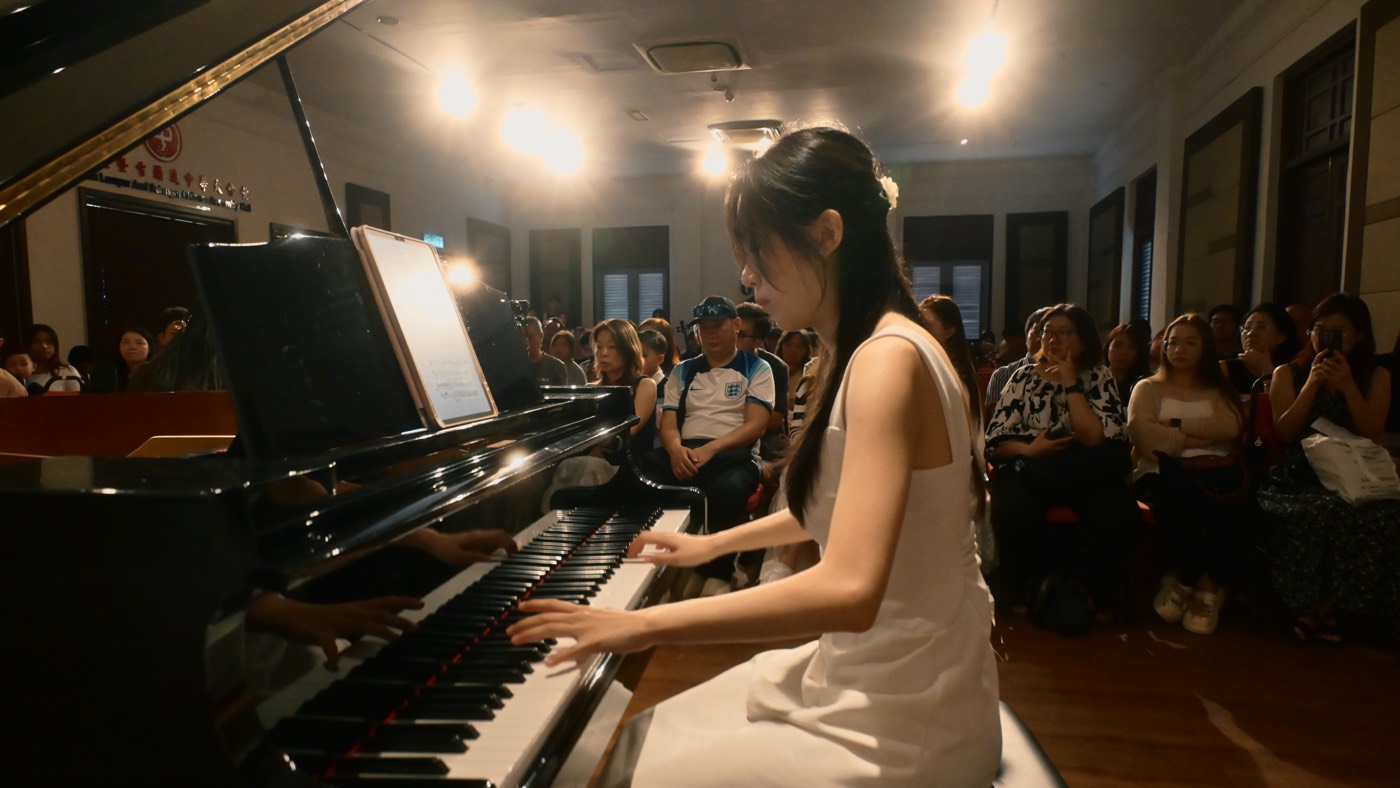
Students here practise on both kinds, incidentally: our studios have acoustic and digital grands rather than practice-room uprights, so a student on a digital at home still meets a full action every week.
Weighted keys are the one specification that matters
On an acoustic piano, pressing a key throws a felt hammer at a string. The weight you feel is that mechanism, and every dynamic a pianist ever learns — the difference between a whisper and a shout, and the hundred gradations between — is learned through that resistance.
An unweighted keyboard has none of it. A key is a switch: it is either on or off. A child can practise on one for a year and arrive at a real piano with fingers that have never had to control weight, which is not a small adjustment. It is the single most common thing we have to unpick in students who have taught themselves at home.
So: 88 keys, fully weighted, hammer action. That phrase is worth more in a shop than any amount of feature comparison. Touch sensitivity alone is not the same thing — check for the word hammer.
The number of voices on a digital piano is marketing. The action is the instrument.
Why humidity is a real consideration here
An acoustic piano is a wooden structure holding around twenty tonnes of string tension, and wood moves with moisture. Kuala Lumpur sits at high humidity most of the year, and the swing between a closed, air-conditioned room and an open, humid one is harder on an instrument than steady heat.
None of that makes an acoustic a bad idea — plenty of homes across Pandan Indah and Cheras keep one happily for decades. It just means the position matters more than people expect:
- Keep it against an internal wall, out of direct sunlight.
- Not directly under or facing an air-conditioner, and not beside a window that gets opened.
- Budget for tuning roughly twice a year, and expect the first year after delivery to need a little more.
- A dehumidifier in the room does more good than any amount of polishing.
A digital piano sidesteps all of this entirely, which is a genuine argument in its favour rather than a compromise.
Come to a trial lesson and let the teacher see your child play first — then buy. Thirty minutes, one-to-one, at Pandan Indah or Damai Perdana. Trial lesson fees apply.
Book a Trial LessonWhat is worth buying at each stage
Almost anything that makes a sound is better than nothing. If a keyboard is what the household can do today, start on it and plan to move up — the momentum matters more than the mechanism.
This is the moment for 88 weighted keys. A decent digital piano at this stage will carry a student for years, and headphones make evening practice possible in a flat.
When the music starts demanding pedal control and fine dynamic shading, an acoustic — or a high-end digital with a very good action — begins to earn its place.
Hundreds of instrument voices, built-in songs, light-up keys. None of them appear in any lesson your child will ever have.
Buying second-hand
The used market in KL is a reasonable place to find a good digital piano, and a risky place to find an acoustic. A digital either works or it does not, and the action rarely degrades quietly. An acoustic can look immaculate and be structurally finished.
If you are looking at a used acoustic, play every key, listen for notes that fail to sound or ring on after release, and check whether the pedals do anything. Then, before money changes hands, pay a tuner to look at it. That fee is the cheapest insurance available, and a technician will spot a cracked soundboard or loose tuning pins in minutes.
And whatever you are buying, ask your teacher first. It costs nothing, and the answer is specific to the student rather than to the shop.
Frequently asked questions
Yes, provided it has 88 fully weighted hammer-action keys. A good digital piano is a better instrument for a beginner than a neglected, out-of-tune acoustic — and in a Malaysian apartment, headphones make practice possible at hours an acoustic never would.
For the first few months, yes, and it is far better than waiting. But unweighted keys build a touch that has to be unlearned later, so treat a keyboard as a bridge rather than a destination. Once lessons pass the earliest stage, move to weighted keys.
Around twice a year for a household instrument, and the tropical climate is the reason. Consistent humidity matters more than the tuning schedule — keep the piano away from direct sun, open windows and the draught of an air-conditioner.
No. Come to a trial lesson first and let the teacher advise before you spend anything. What suits a two-year-old starting out and a student heading towards advanced repertoire are different instruments, and buying in the wrong order is the expensive mistake.