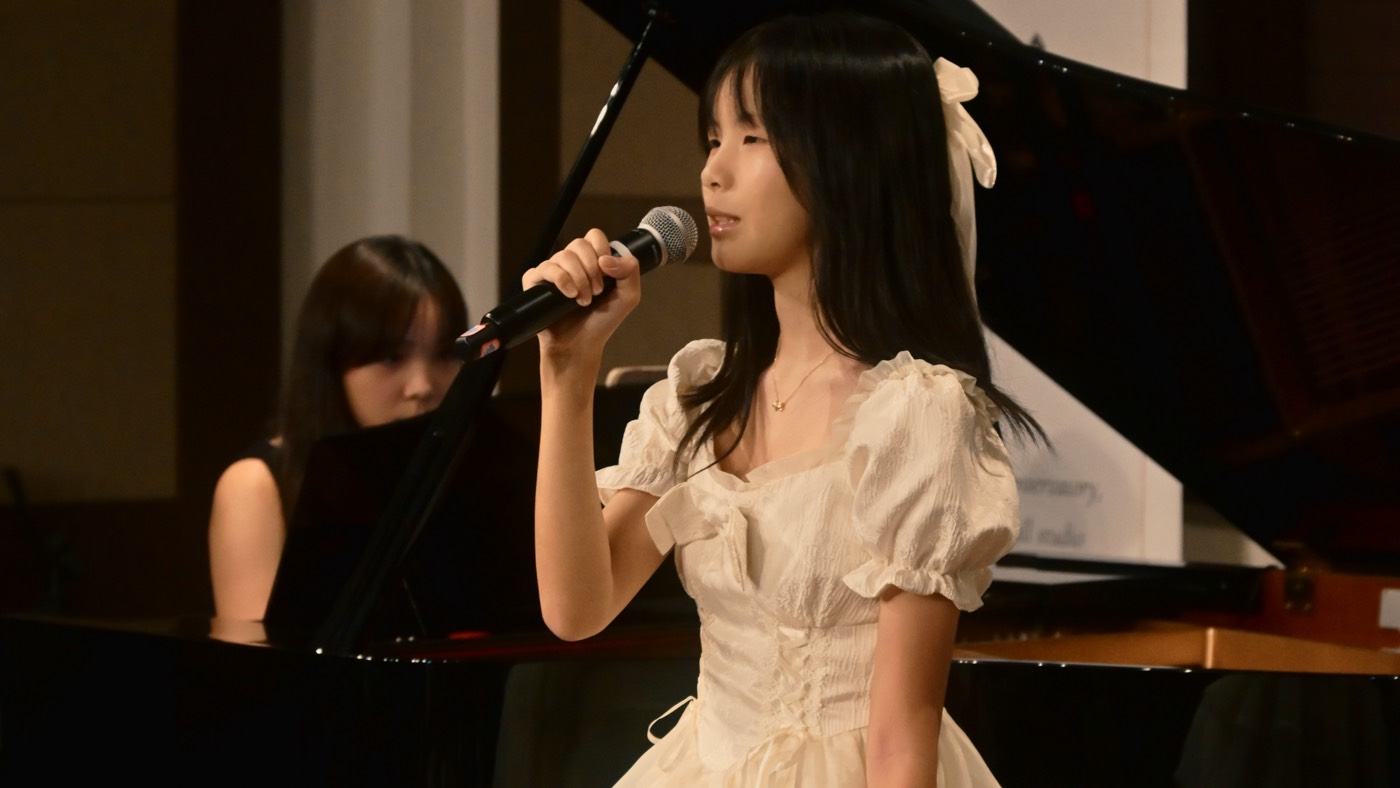
Parents are often surprised to learn that vocals has the latest starting age on our roster. A child can begin piano or ukulele at two. Violin opens at five, guitar and gu zheng at six, cello and drums at seven. Voice waits until eight.
The instinct is that singing must be the easiest entry point — no instrument to buy, nothing to carry, and the child already does it in the back of the car. All of that is true, and none of it bears on the question, because the thing being trained is still growing.
- Every child should sing. Nothing here argues otherwise — singing at home and at school is unreservedly good for a young child.
- Training a voice is a separate activity, and the instrument it works on is still developing until well into the teens.
- We open vocal lessons at eight, which is later than most, and deliberately so.
- Lessons should continue through the voice change, adjusted — stopping is the commoner mistake.
The instrument is the one part you cannot replace
A child who over-tightens on the violin produces a poor sound and learns, slowly, to stop. A child who forces a voice is straining tissue that has to last a lifetime, and the feedback is not immediate. That asymmetry is the whole argument.
A young child's vocal folds are short, thin and still gaining the layered structure that lets an adult voice work hard without tiring. The larynx itself is smaller and sits higher, and both change substantially through childhood. None of this makes singing dangerous. It makes sustained, effortful, technically-directed singing a poor idea before the equipment is ready — and technique is precisely what a one-to-one lesson exists to build.
The commonest injuries in young singers come from pushing volume and range, usually in imitation of adult voices heard on a screen. It is worth saying plainly: a seven-year-old belting a pop chorus at full voice for an hour is doing something we would rather they did not.
What a child can do before eight, and why it is not waiting
The years before eight are not dead time. Almost everything that makes a good singer at fourteen is built somewhere other than the voice, and it can all be built early.
Matching a pitch, hearing when a note is under or over, holding a line against another part. This is ear training, and it is the single largest determinant of how quickly voice lessons progress later.
A singer who reads music is not guessing. A few years of piano gives a child notation, key and interval sense that a voice teacher would otherwise have to teach from scratch.
Coming in at the right moment, shaping a line, breathing where the music breathes. Any instrument teaches this, and the ukulele teaches it while the child sings along.
Singing at home, in the car, at school, for fun and without instruction. This is the part most easily lost once a child starts being corrected, and it is worth protecting.
Children who arrive at eight with two or three years of piano or ukulele behind them do not start behind. They start ahead of where an untrained eleven-year-old typically begins, because the musicianship is already in place and only the voice is new.
A thirty-minute trial is enough for a teacher to hear where a child's ear and range actually are. At Pandan Indah or Damai Perdana. Trial lesson fees apply.
Book a Trial LessonWhat an early vocal lesson is not
A first year of vocal study looks less like performance than families expect. Much of it is breath — where it goes, how it is released, how a phrase is planned around it. Some of it is posture, because a collapsed ribcage makes everything harder. A good deal is quiet singing in a comfortable middle range, which is the least glamorous part of the discipline and the part that protects everything above it.
Range is not the goal early on. A student who can sing an octave and a half cleanly, in tune, without pressing, is in far better shape than one who can reach two and a half octaves by force. The high notes arrive on their own as the instrument grows, provided nothing has been damaged reaching for them.
The voice change, and why lessons should continue
In boys the change is dramatic and generally lands somewhere between about twelve and fifteen. The speaking voice drops, the singing range moves and, for a period, the middle of it can be unreliable — notes that worked last month crack this month. In girls the change is real but less pronounced: the voice thickens and gains weight, and the shift is more often described as losing the childhood brightness than losing notes.
The commonest mistake is stopping. A student who steps away for two years usually comes back with the habits of the old voice and no idea where the new one lives. The better course is to keep going and let the teacher move the goalposts — lower keys, shorter phrases, less range, more patience — until the instrument settles. Students who train through the change tend to emerge knowing their adult voice rather than meeting it as a stranger.
Classical or contemporary
We teach both, and the question matters less at the start than students expect. The foundations — breath, support, free tone, healthy onset — are common to a lieder recital and a pop chorus. What differs is style, and style can be applied to a healthy voice at any point.
What we would not do is teach a young student to imitate a particular singer's sound before they have their own. Imitation is where the strain usually enters, and it is much easier to add a stylistic accent to a secure voice than to rebuild a voice around one.
Frequently asked questions
From eight. That is later than the other instruments we teach, and the reason is physical — the vocal instrument is still developing, and technical work on it is better done once the tissue can take it. Younger children are welcome to start on piano or ukulele and sing all the way through.
No. Singing freely at home, at school and in play is entirely good for a child. What we counsel against is sustained loud singing at the top of the range, usually in imitation of an adult voice, which is where young voices actually get hurt.
We would generally say no. The range moves and becomes unreliable for a time, and lessons adapt to that — lower keys, shorter phrases, less pressure. Students who keep going usually come out the other side knowing their adult voice; students who stop for two years often have to start again.
Start them on an instrument and let the singing continue unsupervised and joyful. Piano and ukulele both open at two, and either builds the pitch, reading and phrasing that vocal lessons will otherwise have to build later. They lose nothing by arriving at eight well prepared.