Most adults who message us open with an apology. They are too old, they have no talent, they only want to play for themselves, they are not sure this counts as a real reason to take lessons.
It is the best reason there is. An adult who wants an hour a week that is entirely their own has understood something about adult life that takes most people a long time to arrive at.
- Playing for interest is a complete reason. No exam, no grade, no recital unless you want one.
- An instrument will not let you multitask — which is most of what makes the hour restorative.
- You choose what you are working towards — a piece you have always wanted, or playing for someone who matters.
An hour that clears the head
Most adults arrive at a lesson still carrying the day — the commute, the message nobody answered, the thing that was said in a meeting. Nobody leaves that at the door, and we do not ask anyone to.
What playing does is give the mind one thing to hold. Reading a line of music, listening to your own sound and moving your hands to meet it takes very nearly all of your attention, and a mind that is fully occupied cannot keep turning the same worry over. The worry is not solved. It is set down for a while, which is something most people find difficult to do on purpose.
The pattern is familiar enough that students describe it in almost the same words. The first few minutes are busy in the head. Then they are not. By the end of the hour the noise has thinned, and what people tend to notice is not the lesson itself but the drive home — the same day, looked at with a clearer head.
None of this makes a hard week easier. What it offers is somewhere to put the week down, and a steadier state to pick it back up in, once a week and reliably. Adults who have been coming a year or two often describe the lesson as the hour that keeps the rest of the week manageable. That is a modest claim, and we think an accurate one.
What adults actually come for
Not for work, not for the family, not useful to anybody else. Many adults have nothing in the week that fits that description, and notice its absence only once it is filled.
A weekday evening lesson works as a hard boundary. Whatever was unresolved at six is still unresolved at eight, and has been out of reach for an hour, which changes how it looks.
A great many adults stopped lessons at eleven or twelve because of examinations. Returning is less about starting than about picking something back up, and it tends to move quickly.
Some people simply want to know what it feels like from the inside — what a piece is doing, why it moves them. That is enough of a reason to begin.
What you can set out to do
Adults have one advantage over every child we teach: they choose what they are working towards. Almost everyone arrives with something specific in mind, even if they apologise for it on the way in.
Very often it is a particular piece — a nocturne someone has loved for thirty years, a song a parent used to play, something heard in a film and never forgotten. Working towards one piece is a perfectly good plan, and we treat it as the plan. Technique gets taught in the service of that music rather than as a syllabus to be got through first. It is a slower route to general skill and a much faster route to playing the thing you actually wanted to play.
Sometimes it is a dream that was interrupted, and sometimes one that never got started. Either way, coming back is not the same as starting over — the ear remembers more than people expect, and returning students routinely surprise themselves inside the first month.
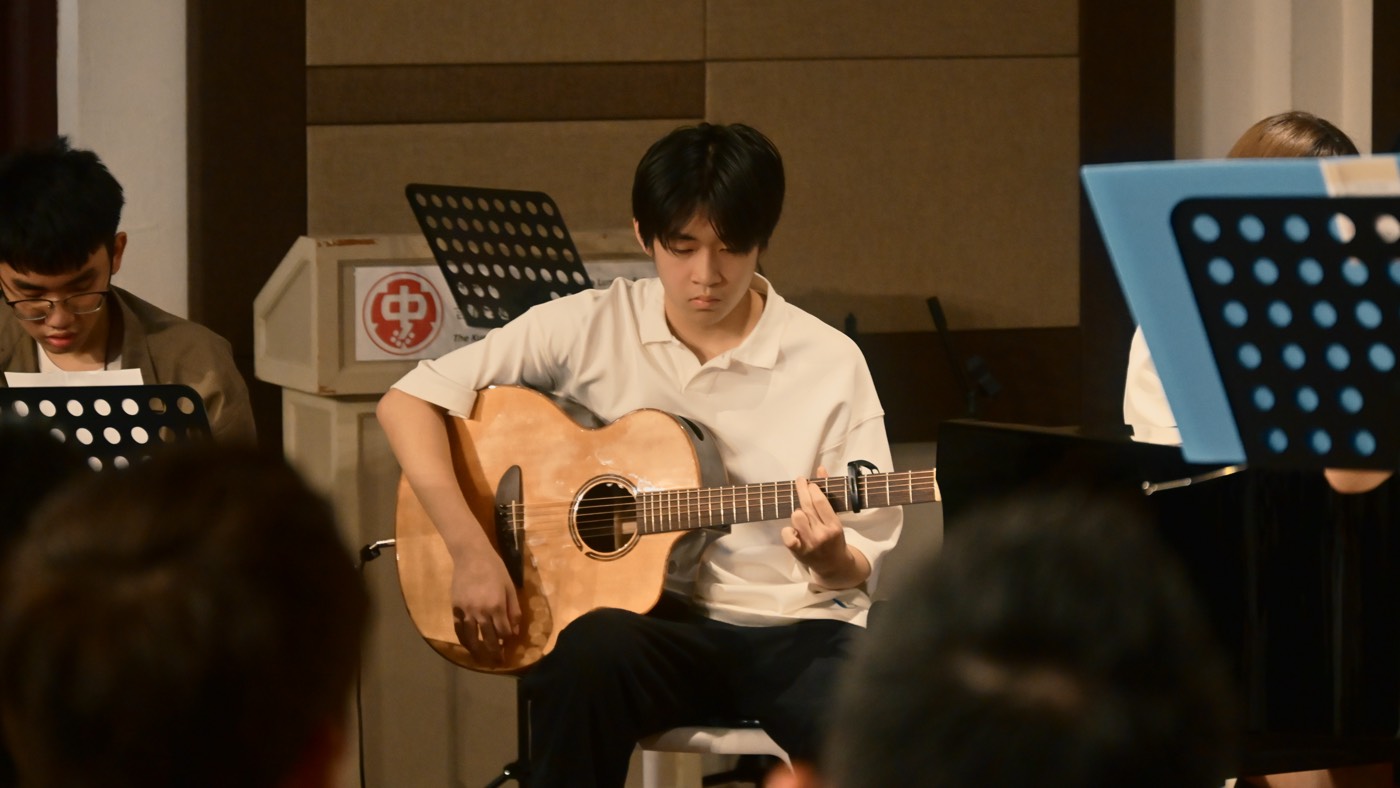
And often it is for someone else. Adults set out to play at a parent's birthday, at an anniversary, for a partner who has never heard them play, for friends at a gathering. A deadline with a face attached to it is the most motivating thing in music — which is part of why the academy holds a recital every three months, and why adults are as welcome on that stage as the children are. Some of our adult students play. Some come to watch, and put their name down for the following quarter.
What is realistic? With twenty minutes on most days, a beginner can expect to be playing short pieces recognisably within a few months, and something they chose for themselves inside a year. A returning adult moves faster than that. Neither is a small thing — though the moment most people describe afterwards is not the recital or the piece finished, but the first time something goes all the way through without stopping, alone, at home, with nobody there to hear it.
A trial is thirty minutes, one-to-one, with no obligation and no prior experience assumed — at Pandan Indah or Damai Perdana. Trial lesson fees apply.
Book a Trial LessonWhat an adult lesson looks like
One-to-one and weekly, half an hour or a full hour depending on what suits you — a minimum of forty-five lessons a year once public holidays and the academy break are set aside. Every one of the eight instruments we teach is open to adults; piano and guitar are the commonest starting points, though we have adults on vocals, ukulele, violin, cello, drums and gu zheng.
Repertoire is a conversation, not a syllabus. If you want to work towards a particular piece, that is the plan. Examinations do not come into it — ABRSM and Trinity preparation is coming soon, and will be optional when it arrives. Nor is there any obligation to perform, though adults are welcome at the quarterly recitals and a fair number choose to play, usually after saying for months that they never would.
On practice: twenty minutes on most days does more than two hours on a Sunday, and a week where you manage nothing is not a failure. Adults who last are the ones who let the habit be imperfect. The practical questions — how long progress takes, which instrument suits a beginner, whether the window really closes — are covered at more length in our guide to learning an instrument as an adult.
Frequently asked questions
None at all. Many adults begin from nothing, and lessons start exactly where you are. Prior experience changes the pace, not whether you should begin.
Yes, and it is one of the commonest ways adults choose to work. We treat the piece as the plan and teach technique in service of it, rather than working through a syllabus first. Depending on what you have picked and where you are starting from, it may be a matter of months rather than weeks — a teacher will tell you honestly at the trial.
Neither. We do not currently enter students for graded examinations — ABRSM and Trinity preparation is coming soon, and will be optional when it arrives. Performing is optional too: adults are welcome at the quarterly recitals if they want the deadline, and some come to enjoy it, but nobody is put on a stage who does not wish to be.
Less than most adults assume. Twenty minutes on most days will move you forward steadily; a week where you manage nothing is normal and not a reason to stop. Frequency matters far more than duration, particularly at the start.